When Suzanne Tiger’s 5th‑grade students at Silver Beach Elementaryfirst heard they would design and build remotely operated vehicles (ROVs), the class was excited about the project. But this wasn’t just about making gadgets: it was a deep dive into the cultural and ecological heart of our region, the Salish Sea.
Last summer, Ms. Tiger attended Western Washington University’s CREST program (Culturally Responsive Elementary Science Teaching) where she learned how to weave together Western and Indigenous knowledge as students investigate their local ecosystem. With guidance from the Explore the Salish Sea curriculum, she introduced her students to the vital role Orcas play in marine life and Coast Salish culture, and the growing threat that plastic pollution poses to these majestic animals.
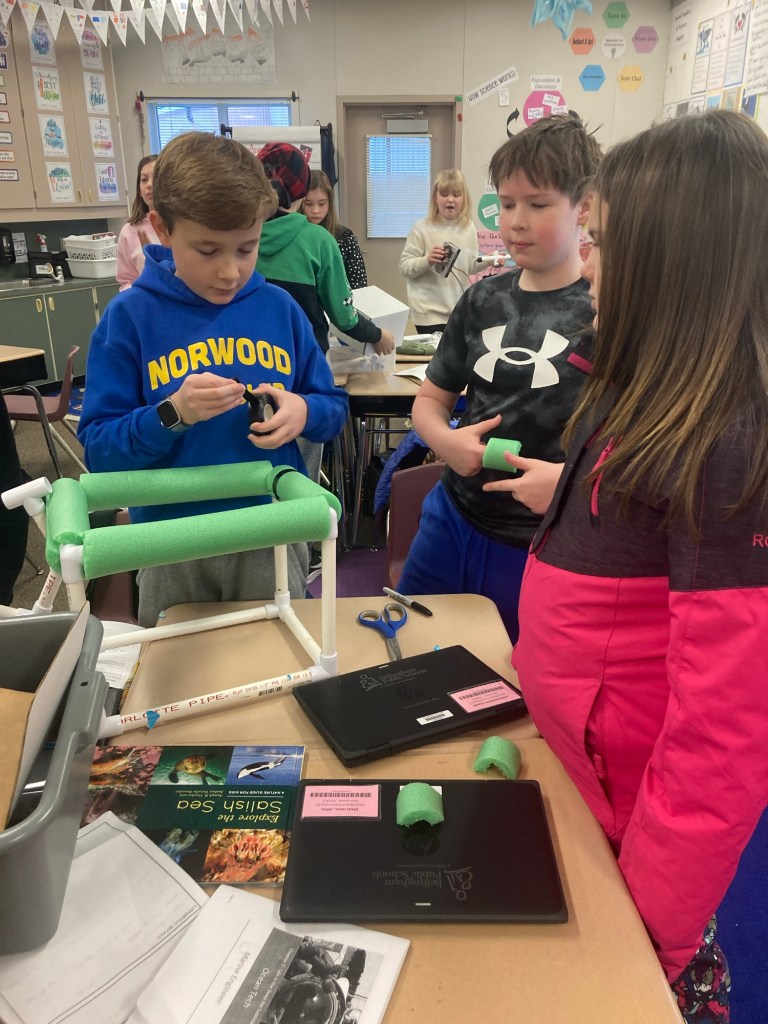
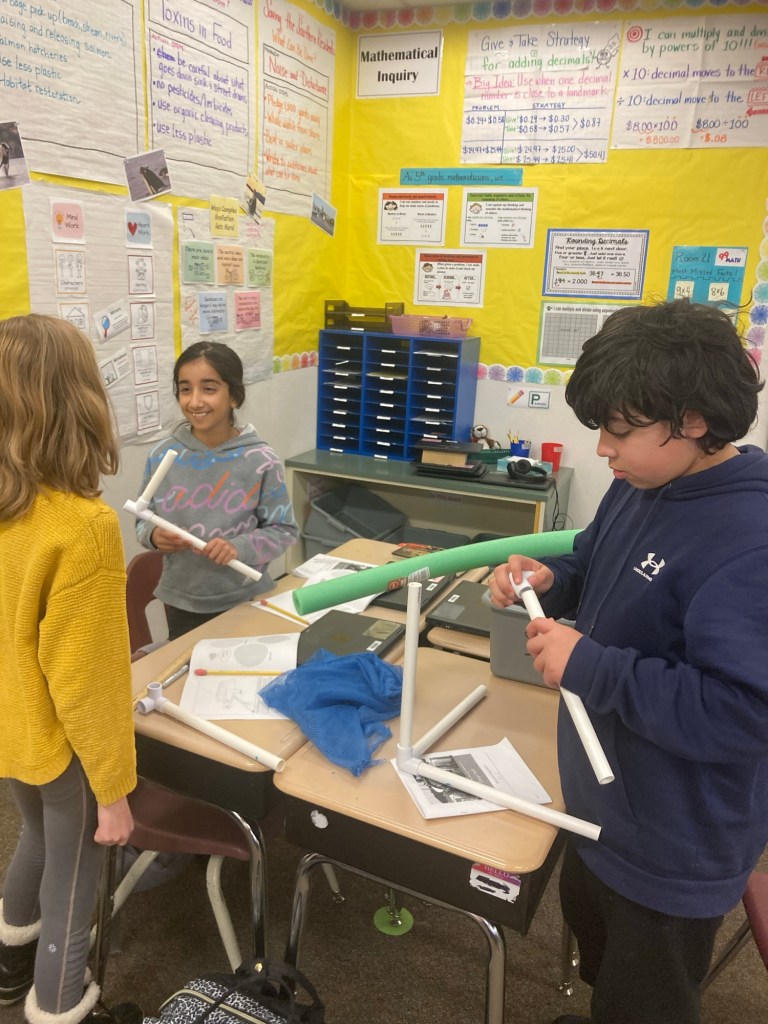
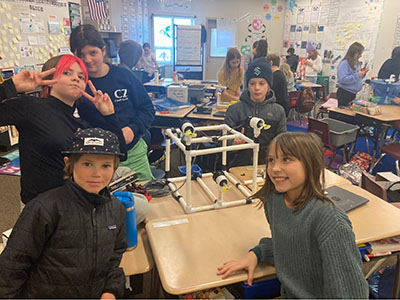
Working in teams of five, students sketched, tested, redesigned, and finally built their ROVs from PVC pipe, pool noodles, batteries, and motors wired by students from Western. Each ROV had to maneuver and collect floating “marine debris.” The iterative design cycle mirrored what real engineers do every day: design, test, fail, and try again.
The class needed a clear, calm body of water to test their inventions; something the winter rains couldn’t provide. Thanks to a grant of $1,000, Ms. Tiger reserved lanes at the Bellingham YMCA pool and booked buses to get her 29budding engineers there safely. In that bright indoor pool, every student could see exactly how their design performed and experience the excitement of seeing their creations put to the test.
The project’s ripple effects go far beyond a single afternoon:
- Collaborative Problem Solving: Working in groups was challenging, but students learned to adapt to problems together– core skills in both engineering and real life!
- Cultural Connection: Lessons on Coast Salish dredging traditions and stewardship fostered respect for Indigenous knowledge
- Environmental Action: Class discussions on micro‑plastics led to a class-wide drive to collect plastic film for recycling with Ridwell
Because the PVC frames and motors are reusable, Ms. Tiger can bring the ROV challenge to future 5th‑grade classes, multiplying the impact of this project for years to come.